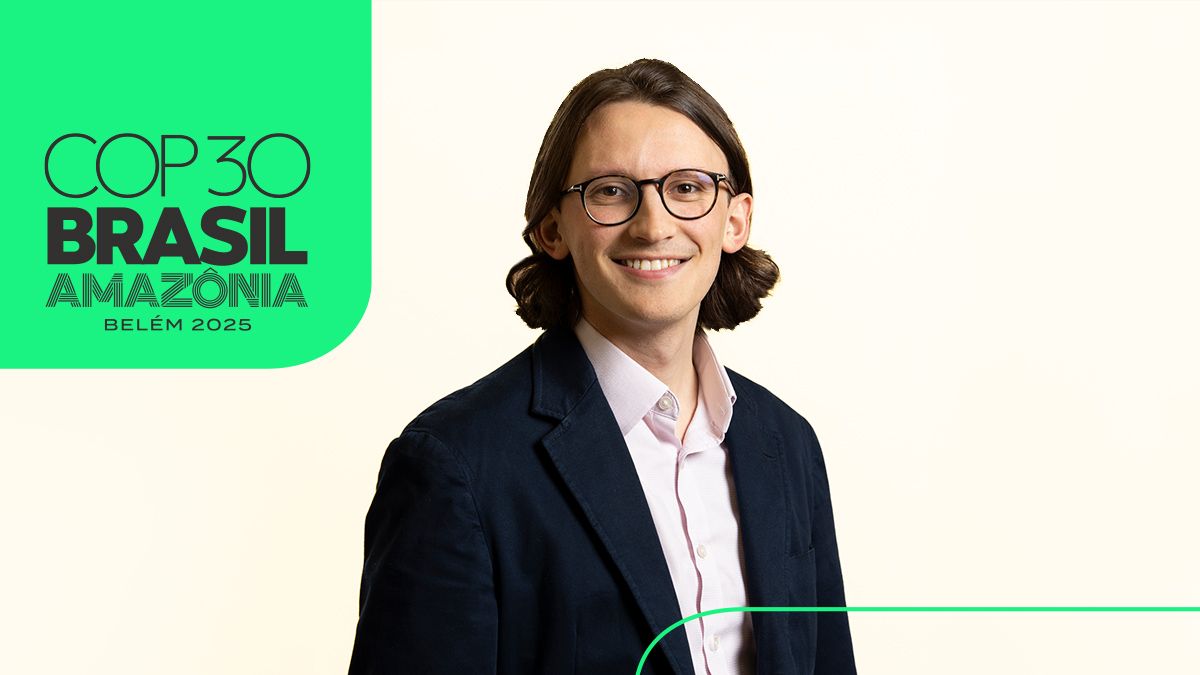
Talk us through your career history, your time at Evident and what has motivated you along the way?
I joined Evident as a graduate from UCL. My career was born out of remote working during the first lockdown of the COVID pandemic. I spent time in Sheffield when our first office reopened and later became our first London employee. I have grown up with the company from its first hires, to the transition from start-up to scale-up and now, its acquisition by Xpansiv. I’ve had exposure to every part of the business including operations, technology, marketing and policy. For the last two years, I’ve worked alongside the executive team to grow our footprint as the global registry of choice for clean energy.
I am always driven by the urgency for change and action. The joint climate and ecological crises represent the greatest challenge of our times. I treat every day as an opportunity to move the needle on presenting a business case for a just transition to a clean economy.
Tell us about your past experiences attending COPs and how you have found the experience?
This was my fourth consecutive COP, so it’s become a regular fixture in the calendar and one of my most cherished. It is an entirely unique experience given the diversity of delegations and proximity to people in positions of power. Unlike most conferences, the COP primarily attracts government officials to conduct negotiations. This provides a blend of public and private sector leaders with the highest potential to influence decision making. One moment you could be rubbing shoulders with politicians and climate envoys, the next, Chief Sustainability Officers from Fortune 500 companies.
Belém might just have been my favourite COP. Whilst the logistics to get there and organisation on the ground may have proved challenging at times, the conditions created a powerful metaphor for the climate emergency. Extreme humidity, thunderous storms and even flooding turned the COP into an immersive experience in what climate change is.
Beyond that, the Brazilians made fantastic hosts as they welcomed us with warmth, salsa dancing and jambu (a local herb that numbs the mouth).
Tell us why COP matters.
Climate is inextricably linked to our economies, energy systems, health and food security, as well as social mobility. A warming climate, with more extreme weather events, has a detrimental impact on each of these outcomes. Therefore, creating the space to convene delegates from nearly 200 countries is an essential mechanism to realise a sense of shared responsibility and implement collection action. COP is a rare example of modern multilateralism where countries from all corners of the Earth attempt to reach consensus on an annual basis. Many question whether this is a worthwhile endeavour given the footprint and cost for organising such events. To them, I would argue: don’t let perfection be the enemy of the good. Without it, there would be no such forum for global cooperation and no arena for accountability on a crisis that demands more collaboration, not further retreat.
How did it feel coming back from COP this time around?
I leave every COP feeling more energised knowing there are others who identify as the generation that will not only heal our planet, but regenerate it. Political consensus on net zero faltered in the UK this year and seems to be missing from mainstream discourse. This COP reminded me there are countless others who are dedicating their lives to addressing climate change, protecting nature, tackling pollution and leading the energy transition.
It can feel disheartening to read everyone’s disappointment in the deal that was achieved. It may lack the ambition required to keep 1.5°C alive, but our measurement of progress should not be limited to the global agreement signed by politicians, but also in the alliances forged in the corridors, the investments agreed for the private sector and the chance encounters on panels that lead to meaningful collaboration.
What do you think were the most important takeaways from the overall event?
My biggest takeaway from COP30 is that the economic argument on climate action is becoming louder and stronger. The Sixth Industrial Revolution is well underway and is being led by China. The Information Age precedes a new era of sustainable development, characterised by renewables, electrification, resource efficiency and soon, batteries. In the first half of 2025 alone, China installed 264 GW of new renewables capacity, mainly from wind and solar.
The primary driver of renewables deployment is cost, not climate. Over 90% of renewables are cheaper than fossil fuels worldwide. What we need now is adjacent investments in grid infrastructure and storage solutions to ensure the energy transition remains resilient and cost-effective.
Talk to us about the session you hosted “I-REC: Empowering Renewable Energy Claims and Trade”
I caught up with the delightful Maria AlJishi and Dr Wei-nee Chen on their respective region’s growing I-REC markets. Maria spoke at length about the impending REC Policy Framework that will provide clear guidance on the use of I-REC in Saudi Arabia to drive corporate investment in renewables and robust claims for sustainability reporting. At the opposite end of the Asian continent, Dr Wei-nee revealed increased momentum towards a cross-border market for ASEAN. The Middle East and Southeast Asia are two key growth regions for I-REC in 2026, each with their own trajectory but converging towards more mature markets for renewable energy tracking systems. Increased recognition and support from policymakers are providing the certainty that investors and corporates need to accelerate the energy transition.
Tell us about the panel discussion you took part in, “Geopolitical Insurance and Blended Finance:Derisking Ukraine’s Green Reconstruction”.
This landmark panel was the first of its kind, bringing together perspectives from finance, insurance and market-based solution providers to de-risk Ukraine’s green reconstruction. Their ongoing efforts are redefining how the world finances resilience in high-risk environments. War and political risk are converging alongside blended-finance mechanisms to transform uncertainty into investible opportunity.
I spoke about the role corporate buyers can play in providing catalytic funding for Ukraine’s clean energy rebuild through innovative types of EACs. I shared lessons learned from Energy Peace Partners (EPP) in their implementation of P-REC across Sub-Saharan Africa to channel finance into some of the least electrified and fragile communities in the world. Their Aggregation Facility is projected to unlock up to nine times more capital (90$ million dollars) for 57 MW of new renewable capacity. This will be achieved by monetising the future yield of energy attributes through corporate purchase and offtake agreements. I recommended this as an innovative model that could be replicated in Ukraine to provide upfront financing for reconstruction costs and help derisk investment.
The outcome of the panel was an inspired plea to host the first ever Green Recovery Summit for Ukraine in London next year.
Now you are back from Brazil, and you have a had a chance to process things, what do you think the future holds, following COP30?
I am naturally an optimist and believe we have every chance in making climate action the growth story of the 21st century. Let us all be inspired by Lord Nicholas Stern’s presentation for a new economic and social paradigm that works in harmony with the rest of nature. After all, this was the Amazonian COP, attracting thousands of people to remind them of the critical role forests play in providing ecosystem services. The bioeconomy is one that should be pursued to promote local economies and livelihoods, but only if nature’s boundaries are protected and its ability to regenerate is preserved. Who better to showcase this in practice than the local communities themselves? This was also the Indigenous COP. These guardians of nature serve as the best examples of how to work with, not against nature.
It has been a lifelong dream of mine to visit the Amazon. My journey in provided a bird’s eye view of its scale and beauty, but also its fragility. I will never forget the juxtaposition of deforested land up against rich biodiversity. That image will remain ingrained in my mind forever and teach me to never lose sight of what we should all be striving to defend.
Climate change is a global phenomenon but is experienced locally in different ways. Climate action is conducted at the global scale, through the COPs, but maybe more importantly, at the local level too. The latter is carried out in our homes, businesses and communities. We can all make choices every day that keep 1.5°C alive. Every increment of warming matters and whilst growing evidence points to overshoot, let us be motivated by hope, not fear.
What are your final thoughts about COP30 and what it means for clean energy certification?
Whilst COP30 reached a less ambitious agreement than most had hoped, it is one that kept global consensus on climate action alive. The final deal agreed to triple finance for countries to adapt to climate change. Another success story was no domino effect from the withdrawal of the US from the UNFCC. If anything, commitment to Paris was reaffirmed.
As aforementioned, the economic argument for the energy transition has never been so loud and strong. Xpansiv exists to underpin this shift, ensuring that all consumers of energy have the choice of renewables. The market-based approach empowers everyone to play an active role in ‘buying clean’ in a trusted and transparent manner.
More articles from Ev.
I-TRACK(G) Product Code and Registry for Biogas and Biomethane
I-TRACK Foundation and Global Gas Tracking Launch I-TRACK(G) Product Code and Registry for Biogas and Biomethane

Report: The Business Case for I-RECs
Why I‑RECs have become central to credible Scope 2 reporting—and how they turn renewable electricity claims into verifiable evidence.
Travis Caddy on his career, COP30 and the future of clean energy certification
"I leave every COP feeling more energised knowing there are others who identify as the generation that will not only heal our planet, but regenerate it."